
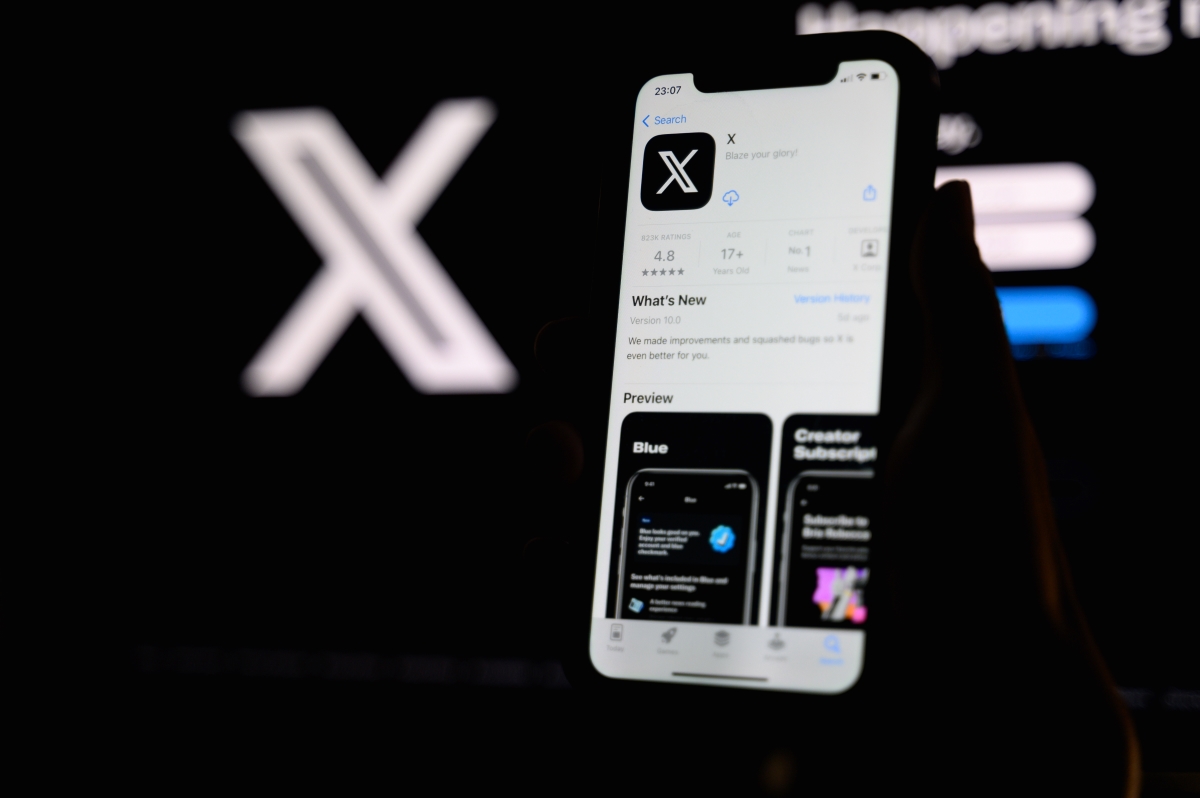
This Friday, July 12, 2024, the European Commission issued a preliminary opinion indicating that the X platform (formerly Twitter) does not comply with the DSA (Digital Services Act). Several shortcomings are attributed to the social network, acquired by Elon Musk in 2022. Let's take stock!
🔹 Misleading blue checkmarks
One of Elon Musk's first projects after acquiring Twitter was to reform the account verification system. Until then, blue checkmarks were awarded free of charge after review by Twitter to accounts representing recognized and publicly important personalities or organizations (journalists, celebrities, companies, governments, influencers, etc.). However, in December 2022, the billionaire introduced a paid system. Now, blue checkmarks are awarded to accounts subscribing to a monthly subscription, regardless of notoriety or public interest, with the exception of government accounts which receive a gray checkmark.
For the Commission, this change introduces confusion about the legitimacy of accounts. The authority states that "malicious actors abuse it to mislead users."
The possibility for anyone to sign up to obtain this "verified" status negatively affects users' ability to make informed decisions about the authenticity of accounts and the content they interact with, the European Commission emphasizes in its statement.
🔹 A lack of transparency
The European Commission also criticizes X for a lack of transparency in two areas:
- Advertising: The Commission considers that X "does not comply with the transparency obligation regarding advertising, as it does not provide a searchable and reliable advertising repository." Platforms must present targeting parameters as well as ad funders, which X does not guarantee.
- Access for researchers: The DSA requires platforms to offer access to public data. The regulator mentions researchers' inability to scrape the social network, as well as the abusive API fees, made paid by Elon Musk.
The procedure followed by X to grant eligible researchers access to its application programming interface (API) appears to deter researchers from carrying out their research projects or leaves them no choice but to pay disproportionate fees, the Commission specifies.
🔹 X not strict enough on fake news?
If the accusations in the preliminary opinion are confirmed, X could risk a fine of up to 6% of its annual global turnover. A period of reinforced monitoring to ensure compliance with measures could also be imposed.
Furthermore, the Commission is currently investigating other potential shortcomings of X regarding the fight against fake news. Last December, the regulator opened a formal procedure against the social network for spreading "false information," "violent and terrorist content," and "hate speech." A few days after the October 7 attacks, Thierry Breton had notably warned about the use of X for disinformation purposes.